The Pyramids of Egypt were really amazing. To walk around them, to enter and touch them--even though they are just empty and stripped of their treasures-- trying to imagine the manpower and skill required to make something so immense, something so long lasting, was like coming face to face with something impossible, yet real and tangible. Tombs of the workers have been found, which leads many to think that the labor force was not made of slaves, but devoted worshippers and skilled craftsmen who sought to honor the gods and the pharaohs who represented gods on earth.
The sloping sides of the pyramids were intended to represent the sun's rays, a symbolic connection between the divine and the earthly. In the temples of later dynasties we saw many other symbols of that connection between divinity and humanity. But first another look at Sakkara, near the Step Pyramid of Djoser (3rd dynasty).


A great plaza stretched between the colonnaded entrance and the step pyramid, where every 25-30 years the king would have to prove his worthiness to continue to reign by racing a bull, then sacrificing the bull at an altar.

Here in Sakkara I saw my first ancient hieroglyphs into the limestone walls. I was about to take my fourth photo of the carvings, but Frank reminded me that we would be seeing plenty more of them.

Sorry for the shadowy photo, but this is a hunting scene from inside the tomb of Ti at Sakkara. Many daily life scenes lined the walls. The red and blue colors are still visible, giving us an idea of how beautiful the tomb paintings were when they were complete.
Valley of the Kings
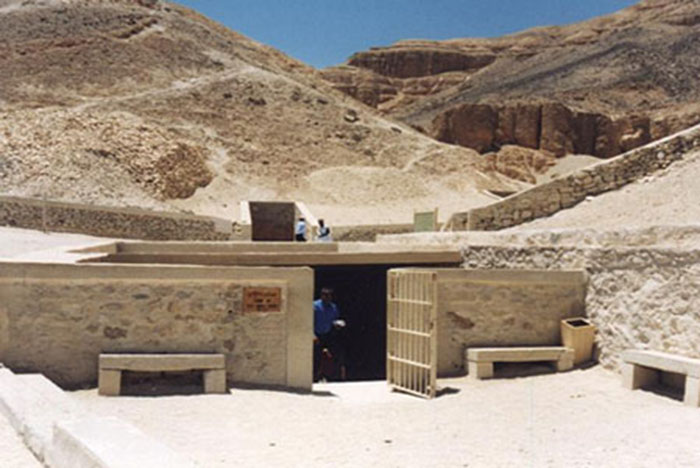
Because later pharaohs didn't have the resources to build and maintain pyramids, and because pyramids were consistently vandalized, the Valley of the Kings became a popular burial place. Its location was so secret that legend says craftsmen were conveyed to the valley while blindfolded. Smaller shafts and tombs were easier to build, and decoration within tombs became more elaborate.
This valley within a mountain range contains many famous tombs from the 18th dynasty onward which are open on a rotating basis to limit exposure to the elements. Unfortunately, photography is not allowed.


This is the temple of Hatshepsut, the female pharaoh, located on the other side of the mountain range from the valley of the kings.
As tombs got smaller and more centralized, temples got bigger and more centralized. They celebrated nature, depicted dieties giving strength and wisdom to the pharaoh, celebrated the pharaoh's military victories, and even thanked donors who brought offerings.

The hypostyle hall of Luxor Temple is the ultimate in this architectural form, with carvings of animals, birds, and plants lining its 134 columns.


Here are some beautiful pictures from Mt Sinai


No comments:
Post a Comment
We invite your comments, but if you want to contact us directly and don't know our email address, contact us at jerusalemjudds@gmail.com.